In today’s fast-paced world, finding moments of calm has become more important than ever. Between busy schedules, endless notifications, and the constant flow of information, our homes are increasingly becoming places of refuge where we can slow down, recharge, and reconnect with ourselves. That shift is one of the reasons sage green has become one of the most loved interior design colors in recent years. Soft, earthy, and effortlessly elegant, sage green brings a sense of balance that few colors can achieve. Inspired by nature, it creates a soothing atmosphere while still feeling sophisticated and modern. Unlike trend-driven colors that quickly go out of style, sage green offers a timeless quality that feels fresh, welcoming, and versatile in almost any home. When used in a living room, sage green has a unique ability to transform the entire mood of the space. It pairs beautifully with warm wood tones, creamy neutrals, natural textures, and soft lighting, creating an environment that feels both cozy and refined. Whether your style leans toward modern minimalism, organic contemporary design, Scandinavian simplicity, or soft luxury interiors, sage green can adapt effortlessly while maintaining its calming presence. In this guide, you'll discover 25 cozy sage green living room ideas that blend comfort, elegance, and modern luxury. From layered textures and natural materials to sophisticated color combinations and thoughtfully curated decor, these inspiring ideas will help you create a living room that feels warm, inviting, and beautifully connected to nature.
1. The Earthy Sanctuary: A Sage Green Living Room Retreat
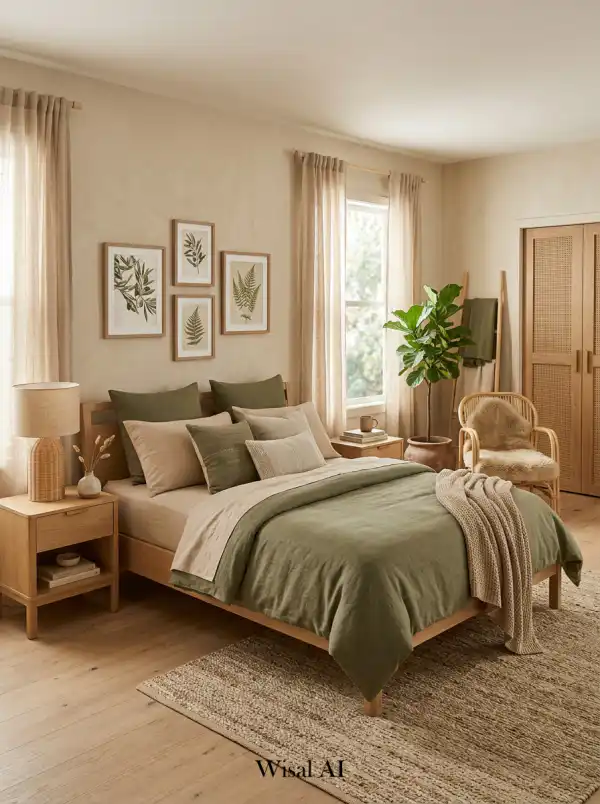
This space is all about grounding yourself. By mixing muted sage tones with natural jute textures and raw wood, the room breathes a sense of organic luxury. It’s perfect for those who want their home to feel like a high-end spa in the middle of nature. Design Tip: When using a light sage palette, use layered textures instead of bright colors to create depth. Mix rough jute with smooth linen to keep the eyes moving without breaking the "calm" vibe.
2. Botanical Elegance in Sage Green Living Spaces
Bringing the outdoors in shouldn't feel cluttered. This design uses a deep sage foundation to highlight lush indoor greenery. The use of woven textures and mid-century modern furniture creates a timeless look that feels fresh and airy. Design Tip: Use warm-toned metals like brass or gold with sage green. The warmth of the metal prevents the green from feeling too "cold" or clinical.
3. The Moody Heritage: A Deep Sage Green Living Room
There is something incredibly sophisticated about a room that isn't afraid of color. This space wraps you in a hug of muted olive and sage, using historical architectural details like crown molding to elevate the mood. Design Tip: To make a dark room feel "calm" rather than "small," keep your ceiling and trim white. This "caps" the color and allows the height of the room to remain airy.
4. Polished Serenity: Sage Green Living Design
This is the pinnacle of "Quiet Luxury." It’s a symmetrical, balanced space that uses a very specific shade of silvery-sage to create a formal yet inviting atmosphere. It feels like a high-end London townhouse. Design Tip: For a formal look, symmetry is key. Placing two sofas opposite each other creates an immediate sense of order and tranquility that our brains find naturally relaxing.
5. Modern Minimalism in Sage Green Living
Clean lines meet soft colors. This room is a lesson in how to use "negative space" to make a room feel larger. The sage green is used as a soft backdrop to highlight the sculptural shapes of the furniture. Design Tip: When using a minimalist style, invest in one "hero" plant. A large Monstera or Olive tree acts as living art and fills the space without needing extra furniture.
6. The Airy Atrium: A Sage Green Living Haven
Light is the most important "furniture" in this room. With massive windows and a pale sage palette, this space feels like it's floating. It’s the ultimate "breath of fresh air" for a home. Design Tip: In very bright rooms, avoid glossy surfaces. Use matte marbles and unpolished woods to prevent harsh glares that can disrupt the calm atmosphere.
7. The Verdant Gallery: Sage Green Living Room Vibes
This design uses layers of green—from the walls to the furniture to the plants—to create a "monochromatic" look that is anything but boring. It’s rich, textured, and deeply artistic. Design Tip: If you're going for a monochromatic green look, vary the "temperature" of the greens. Mix yellow-greens (lime/moss) with blue-greens (sage/forest) to give the room dimension.
8. Traditional Warmth: Sage Green Living Style
This room feels like a classic library or a study. It uses sage green to modernize a traditional fireplace setting, creating a space that feels both prestigious and comfortable. Design Tip: A large mirror above a fireplace doesn't just look good—it doubles the amount of "sage" in the room by reflecting the opposite walls, making the color theme feel more immersive.
9. The Tropical Transitional: Sage Green Living Decor
This room bridges the gap between a tropical bungalow and a modern apartment. It uses bold green accents and natural textures to create a vacation-like vibe every single day. Design Tip: Use lampshades in the same color as your accent (sage). It’s an old designer trick that makes the lighting feel integrated into the room's color story rather than just an afterthought.
10. Sage Green Living: The Sun-Drenched Nook
For smaller spaces, sage green can act as a neutral. This room shows how to use light woods and soft greens to make a compact area feel expansive and peaceful. Design Tip: In small rooms, use a leggy coffee table (like one with thin brass legs). Being able to see the rug underneath the table makes the floor space feel larger and less "clogged."
11. The Botanical Gallery: Sage Green Living
This space is all about bringing the outdoors in without the clutter. A muted sage accent wall serves as the perfect backdrop for a curated collection of botanical sketches. The balance between the soft beige sectional and the deep forest green accents creates a layered, sophisticated look that feels both grounded and airy. Design Tip: When using an accent wall, match your picture frames to the wood tones of your furniture. This creates a "visual anchor" that makes the green wall feel like a deliberate part of the architecture rather than just a coat of paint.
12. Earthy Minimalism in a Sage Green Living Space
There is something deeply restorative about the combination of raw wood and soft Sage. This room focuses on the "Touch of Nature" concept, using a heavy, reclaimed oak coffee table to contrast the softness of a beige fabric sofa. It’s a masterclass in organic luxury for 2026. Design Tip: To achieve 2026’s "quiet luxury" look, opt for matte finishes. Avoid shiny metals or glossy paints; instead, use lime-wash or clay-based paints to give your sage walls a breathable, organic feel.
13. Terracotta Meets Sage: A Warm Living Room Evolution
Sage doesn't have to be cold. By introducing burnt orange and terracotta tones through textiles and rugs, you can transform a green room into a cozy sanctuary. This style blends Mediterranean warmth with Nordic coolness. Design Tip: If your sage walls feel too "flat," bring in a rug with warm undertones (reds, oranges, or browns). The color contrast will make the green pop while making the room feel significantly more inviting.
14. The Modern Orchard: Vibrant Sage Green Living
This design is for those who love color but want to maintain a sense of calm. The use of a muted teal or seafoam-green sofa against a sage wall creates a monochromatic layering effect that is very popular in contemporary high-end apartments. Design Tip: Layering different shades of green (Sage walls + Seafoam sofa) creates "depth." To prevent it from looking like a jungle, break up the greens with natural wood furniture and woven textures like rattan or wicker.
15. Velvet Serenity: The Ultimate Sage Green Retreat
Nothing says luxury like velvet. A deep olive or sage velvet sofa becomes a jewel in a room with neutral walls. This look is about high-contrast textures—the smoothness of velvet against the ruggedness of a jute rug. Design Tip: For a cozy evening vibe, use "layered lighting." Don't rely on the ceiling light; use floor lamps and table lamps with warm bulbs (2700K) to make the sage tones look golden and soft.
16. The Forest Lounge: Deep Sage Green Living
For a bolder approach, deep sage and dark wood create a "Forest Lounge" atmosphere. This is the peak of 2026 luxury—using darker, more saturated tones to create a cocoon-like feeling of safety and prestige. Design Tip: Deep colors can make a room feel small if you don't have enough light. Balance dark sage walls with a light-colored rug and "pops" of white or cream in your artwork to keep the space feeling open.
17. The Textural Oasis: Sage Green Living Design
Texture is the secret ingredient of luxury. In this space, the sage green sofa is surrounded by "pampas grass," woven poufs, and raw wood shelving. It’s a sensory experience that feels as good as it looks. Design Tip: Don't be afraid to mix different types of "greenery." Mixing live plants with dried botanicals (like pampas or eucalyptus) adds a professional, "styled" layer to the room that feels lived-in and expensive.
18. The Scandi-Sage Sanctuary
Clean lines, light wood, and plenty of white space. This room uses a very pale sage sofa to anchor a bright, white-walled room. It’s the perfect example of how sage can replace grey as the new "modern neutral." Design Tip: If you aren't ready to paint your walls green, buy a sage green sofa. It acts as a "neutral" that is much more interesting than grey or beige, and it pairs perfectly with almost any wood tone.
19.A Cozy Sage Green Living Room Idea with Sun-Drenched Vaulted Ceilings
Discover how to elevate an open-concept living space using an earth-toned palette. This design seamlessly blends a luxurious sage green sectional with soaring architectural details and abundant natural light, creating the ultimate cozy yet sophisticated retreat. Design Tip for the Reader: To master this look, prioritize architectural balance. When using dark wood beams on a high ceiling, keep your walls a soft, warm off-white rather than a stark bright white. This prevents the room from feeling cold and ensures the dark wood feels grounding rather than heavy.
20.Earthy Warmth & Textured Serenity: A Cozy Sage Green Living Room Idea
Step into a sanctuary of warmth where rustic textures meet soft luxury. Featuring a deep olive-sage sofa, exposed raw timber ceilings, and a monolithic wood coffee table, this space redefines comfort with a moody, organic aesthetic. Design Tip for the Reader: When working with muted lime-wash walls and deep green furniture, lighting is everything. Rely on warm-toned lighting (between $2700\text{K}$ and $3000\text{K}$) for your lamps and fixtures. This enhances the golden undertones in the plaster and keeps the green upholstery looking rich and cozy instead of flat.
21.A Cozy Sage Green Living Room Idea Embracing Botanical Elegance
Bring the beauty of nature indoors with a botanical-inspired living room design. See how a Tailored sage green sofa pairs effortlessly with rustic floating shelves, abundant indoor plants, and rich woven textures for a lively yet calming atmosphere. Design Tip for the Reader: To prevent a plant-filled, green-themed room from looking one-dimensional, introduce varying tones of wood and woven materials. The contrast between the sleek velvet of a sage sofa, the rough texture of seagrass poufs, and the warmth of dark wood shelves creates a layered visual story that feels curated over time.
22. Soft Minimal Harmony: A Light Sage Green Living Retreat
Step into a space where simplicity becomes the ultimate form of luxury. This living room embraces a soft sage green palette layered with creamy whites, pale beige textiles, and subtle natural wood accents. The atmosphere feels weightless yet grounded, creating a calming visual rhythm that instantly slows down the mind. A low-profile sofa in muted sage fabric anchors the space, while sheer linen curtains allow natural light to gently diffuse throughout the room. The design avoids visual clutter completely, focusing instead on balance, proportion, and soft transitions between tones. Every element feels intentional but never forced, resulting in a space that feels both modern and deeply peaceful. Design Tip for the Reader: To maintain the soft minimal look, avoid high-contrast decor. Stick to tonal layering within the same color family. Use matte finishes for furniture and walls to reduce visual noise and keep the atmosphere consistent and serene.
23. Organic Japandi Balance: Nature-Inspired Sage Green Living Room
This design blends Japandi minimalism with natural organic warmth, creating a living room that feels deeply connected to nature. Sage green walls act as a grounding backdrop for low wooden furniture, neutral-toned cushions, and handcrafted ceramic decor pieces. The space is intentionally restrained, allowing each material to speak through its natural texture rather than decoration. The atmosphere feels calm, balanced, and slightly meditative like a quiet retreat designed for slow living. Nothing feels excessive, yet nothing feels empty. The harmony between Japanese restraint and Scandinavian comfort defines the entire emotional tone of the room. Design Tip for the Reader: Focus on natural imperfections. Choose handmade ceramics, raw wood textures, and uneven natural fibers. Avoid overly polished finishes authenticity is what gives this style its emotional depth.
24. Modern Earth Luxury: Sage Green with Dark Stone Contrast
This living room concept introduces a bold yet refined contrast between soft sage green tones and darker stone-inspired elements. Think sage green upholstery paired with charcoal stone walls, black metal accents, and a heavy natural stone coffee table. The result is a space that feels modern, grounded, and quietly powerful. The lighting is soft and directional, highlighting textures rather than flooding the space. This creates a layered visual experience where shadows enhance depth and luxury replaces brightness. The sage green tones soften the darker elements, preventing the room from feeling too industrial or cold. Design Tip for the Reader: When mixing dark stone with sage green, always introduce soft textures like boucle fabric or wool rugs. This prevents the space from feeling too rigid and maintains emotional comfort within a strong visual contrast.
25.Warm Botanical Elegance: A Nature-Infused Sage Green Sanctuary
This idea brings the outdoors inside, creating a living room that feels alive with natural energy. Sage green walls set the foundation, while abundant indoor plants, light oak furniture, and woven natural fibers complete the organic aesthetic. The room feels fresh, breathable, and emotionally uplifting without losing its sense of elegance. Soft sunlight filtering through sheer curtains enhances the botanical atmosphere, making the entire space feel like a calm indoor garden. The design strikes a perfect balance between structured interior styling and natural spontaneity, creating a space that feels both curated and effortless. Design Tip for the Reader: Layer different plant heights and leaf shapes to create depth, but avoid overcrowding. Negative space is just as important as greenery in maintaining a calm and luxurious botanical atmosphere.
Conclusion
Designing a living room is far more than an exercise in aesthetics it is a conscious investment in your everyday peace and emotional well being. The true beauty of sage green lies in its quiet confidence; it never overwhelms the space, yet it always transforms it. It can act as a bold foundation or a subtle accent, always maintaining its calming, nature-inspired presence. Whether you choose to immerse your entire living room in its soft, earthy tones or introduce it through delicate touches like textiles, artwork, and decor, you are ultimately embracing a lifestyle rooted in “quiet luxury.” A style that values stillness over noise, harmony over excess, and meaning over decoration. In 2026, our homes are no longer just places we live in they are spaces where we recover from the world. By blending sage green with warm natural wood, tactile fabrics, soft lighting, and thoughtful minimalism, you are not simply designing a room you are creating a sanctuary that restores balance every time you step into it. This is the essence of modern living: not to impress the eye, but to calm the mind.
FAQ
Q1: What colors pair best with a sage green living room?
Stick to creams, warm beiges, and walnut woods for a luxury feel. Use brass accents to add instant warmth and elegance.
Q2: Is sage green still trendy in 2026?
Yes, it’s now a "new neutral." It remains the top choice for biophilic, nature-inspired luxury that never goes out of style.
Q3: How to keep sage green feeling warm?
Avoid blue-toned sage. Instead, layer natural textures like linen, wool, and oak. Use warm 2700K lighting to avoid a cold, clinical look.
Q4: Does it work for small rooms?
Perfectly. Light sage expands the space visually while adding more character and depth than plain white or grey.
Q5: Best lighting for this style?
Soft, indirect light is key. Use floor lamps and warm bulbs to highlight the silver-moss undertones of the color at night.